
Food culture
The food of the Kainuu region has always been simple, yet still very varied and delicious
Food culture in Kainuu has been shaped by harsh conditions into a cuisine based on the gifts of nature and a deep respect for ingredients. The region’s food has always been simple, yet remarkably diverse and flavorful, the bounty of the waters, forests, livestock and fields.
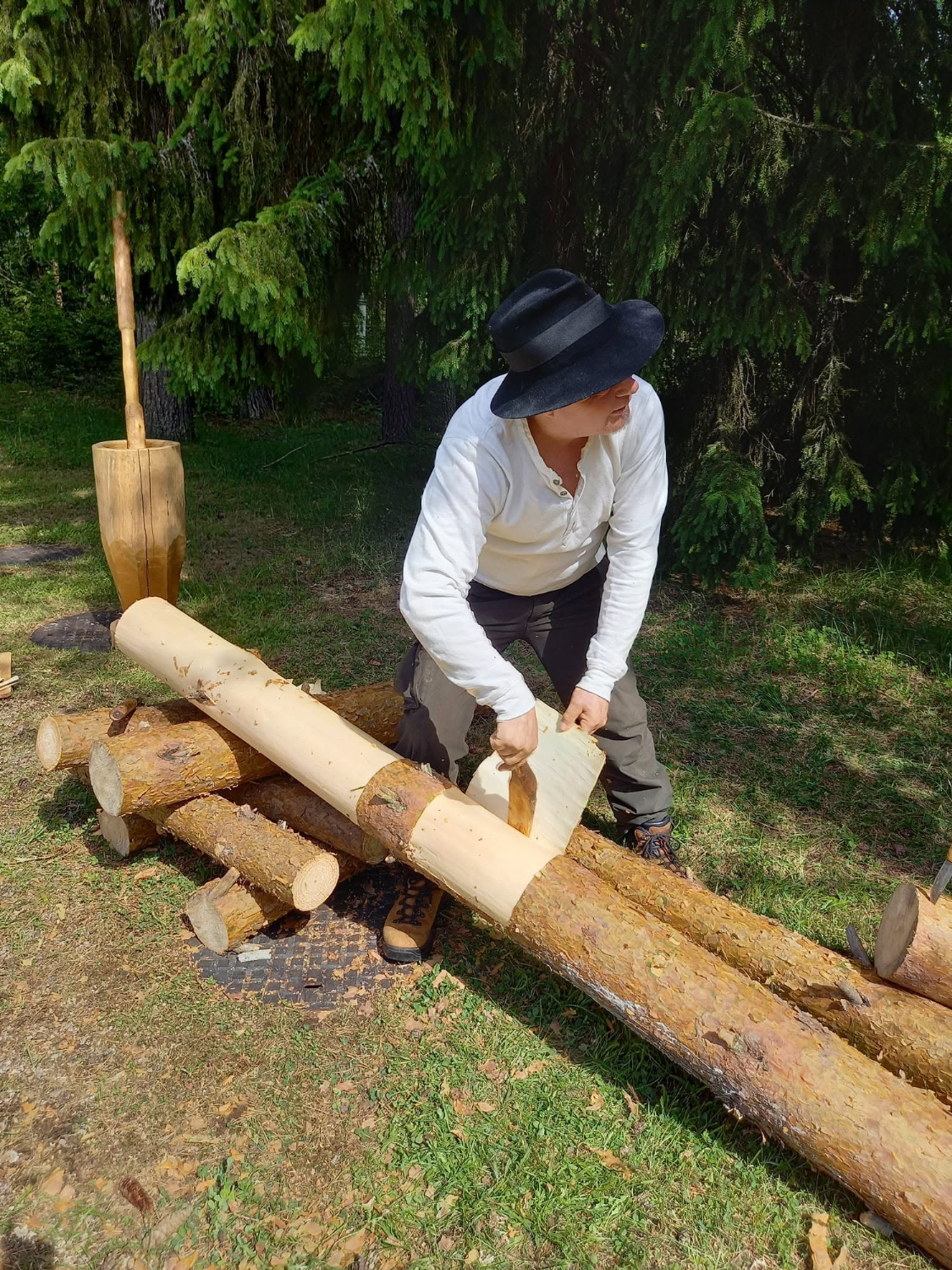
Dishes were prepared using fish, livestock, game, and berries, alongside barley, rye, and turnips. While the potato eventually established itself as a staple, other root vegetables like carrots and rutabagas are relatively recent arrivals in Kainuu. Mushrooms were not gathered or preserved at all; it was only through the culinary habits introduced by Karelian housewives that mushrooms found their way onto Kainuu dining tables. When discussing the harvest of the forest, one must not overlook pettu (pine-bark flour), which for many autumns was the only ingredient for bread.
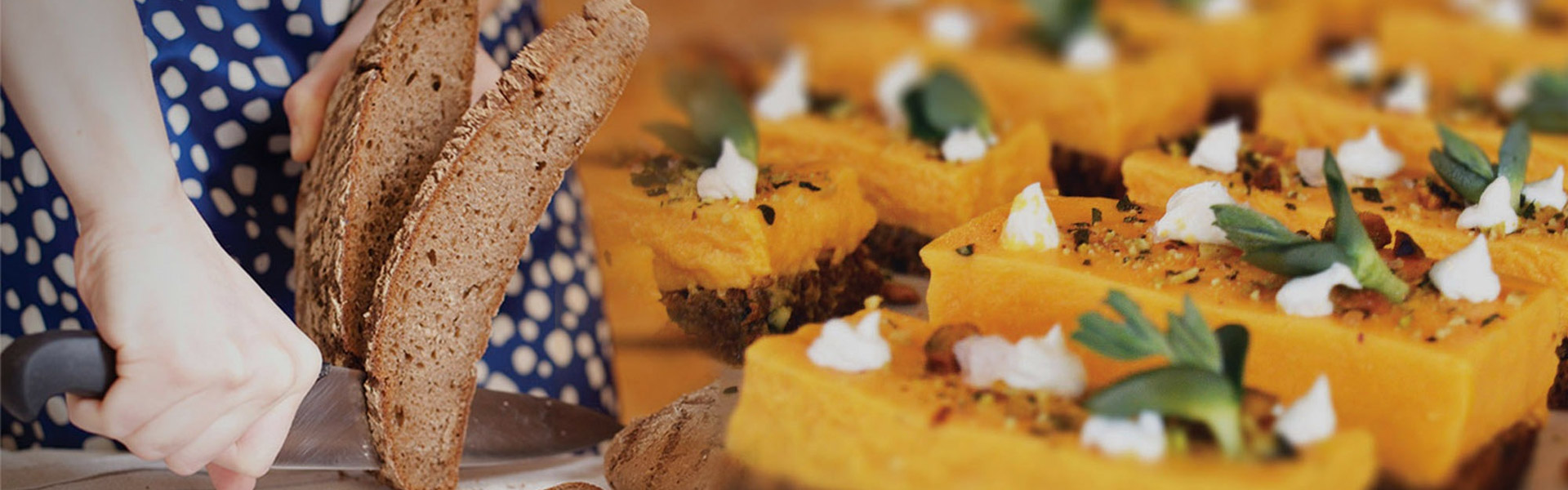
The tradition of tar production remains alive in the region, and tar is also incorporated into various food products. Its flavor lends itself well to a wide range of items, including bread, cured fish, sweets, and ice cream.
Image: Kirsi Sahrman-Hauhia.
Weekday and holiday food and kekri
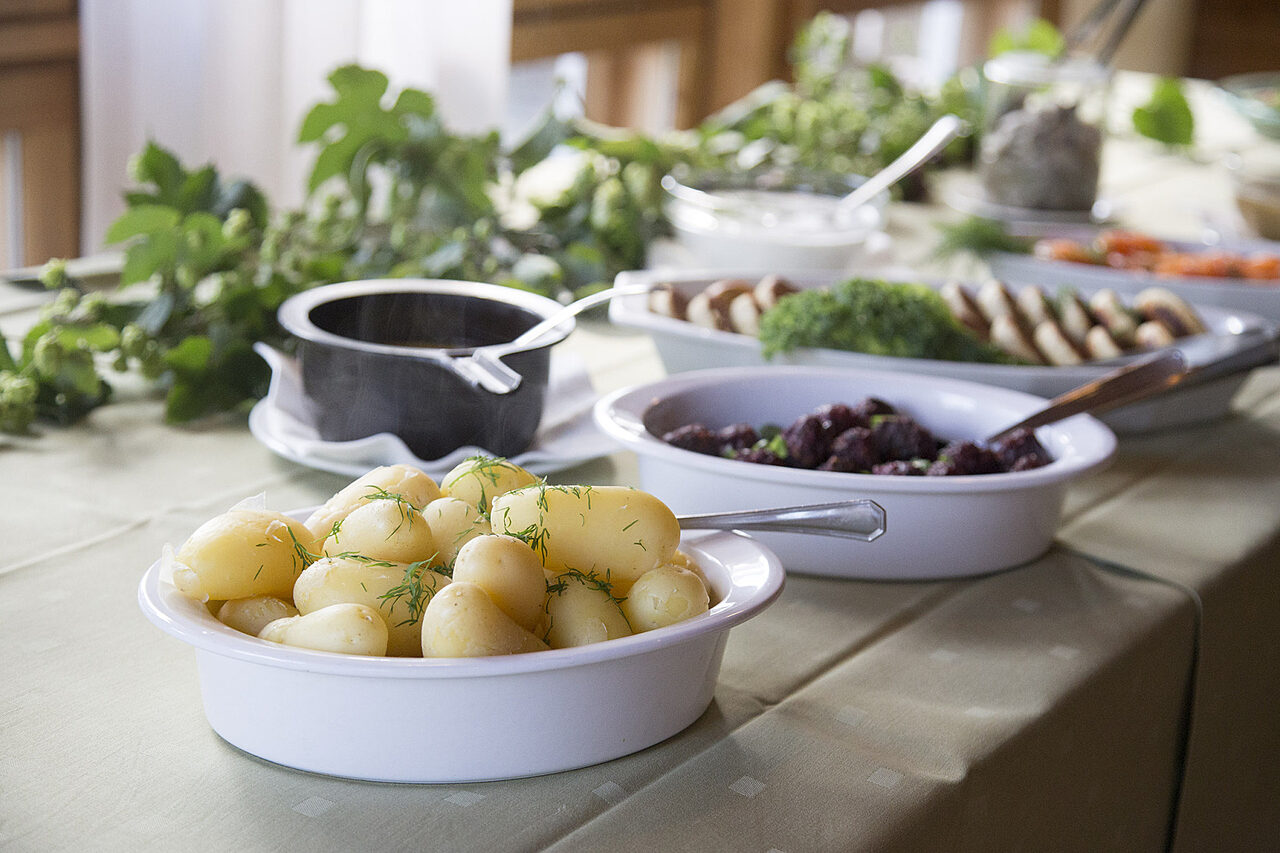
Food preparation by Kainuu women centered around the main room's stove; since the stove also served as the room's heat source, it was used for cooking on a daily basis.
Thickened soups, formerly known in the region as velli, are considered a specialty of Kainuu. Varieties included meat, fish, dried fish and berry soups. In contrast, dishes referred to as kalapottu (fish and potato soup) or lihapottu (meat and potato soup) were unthickened broths. Everyday meals also included turnip soup, leipämaito (warm milk with bread pieces), and pottumaito (warm milk with potato pieces).
Meals on Sundays and holidays differed slightly from everyday fare. Talakkuna (a traditional roasted grain flour dish) was a staple dish on Sunday mornings. Barley porridge appeared on Kainuu tables long before rice porridge did, as rice arrived in remote Kainuu later than in the rest of the country. Roast meat or smoked meat soup were also enjoyed on holidays. Afternoon coffee was accompanied by nisu (sweet cardamom bun) and juustoleipä (oven-baked cheese, known also leipäjuusto in other parts of Finland). Traditionally, this cheese is eaten with cloudberries, but it is also enjoyed broken into pieces and added directly to the cup of coffee.
For decades, Kekri (the traditional autumn harvest festival) was the most important celebration in Kainuu, and the holiday featured its own special delicacies. Dishes prepared for the occasion included sheep's head soup, syltty (aspic) and smoked meat soup. In the past mämmi (a traditional malted rye pudding) was served at both Easter and Kekri feasts in Kainuu.
Image: stock photo
Flatbreads, rye-crust pies and pastries
Kainuu is known for its abundant baked goods, boasting dozens of delicious varieties. Bread in its many forms is the foundation and pride of Kainuu’s culinary culture.
A defining characteristic of Kainuu bread is its ability to keep hunger at bay for a long time. The breads were filling and nutritious, yet tasty and healthy. Sourdough rye bread served as the staple daily bread. Traditionally, Kainuu rye bread was a massive sourdough loaf described as being "two hand-spans wide and half a hand-span thick." Later, local women also began making reikäleipä (bread with a hole in the center).
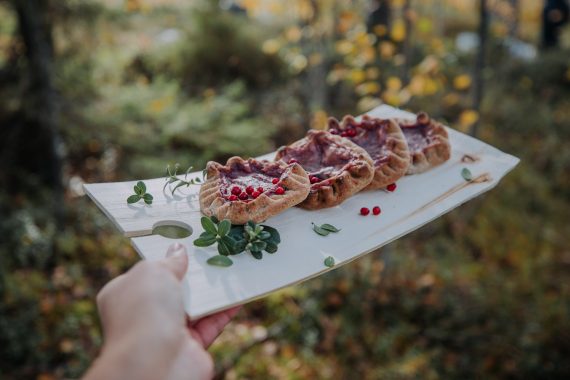
Festive tables in Kainuu featured a wide array of baked goods; the most famous among them were nyrkkirieska (barley flatbread), kukko (crust-encased pies), and teos (filled pastries).
Pastries from Kainuu were known as teos. The barley teos was a showcase of a woman´s skill before rice arrived in Finland. Traditionally, these pastries were served cut into quarters. Perhaps the most famous of these is the rönttönen, which holds EU protected status, a traditional pastry from Kuhmo made with sweetened mashed potato and lingonberries. Kainuu kukko pastries came in both closed and open varieties, with fillings such as rutabaga, turnip, potato and fish.
Image: aitojamakuja.fi
Regional and local dishes of Kainuu
Kainuu’s traditional local and regional dishes were designated in the 1980s as part of a national project on local cuisine. In Kainuu, the selection was made by the Regional Council of Kainuu, with the endorsement of representatives from home economics advisory organizations.
Kainuu’s regional dishes include talkkuna (steamed barley flour), nyrkkirieska (hand-pressed flatbread), Kainuu-style fish soup, kukko (potato, rutabaga and turnip fillings, as well as open-faced and sealed fish pies), pottumaeto (potato- warm milk soup), pottuvoi (potato-butter mash) and sautéed meat, imellysmarjapuuro (sweetened berry porridge), viili (fermented milk), and juustoleipä (bread cheese) with pöönäkahvi (traditional coffee).
Kainuu’s specific local dishes (by municipality) are:
Hyrynsalmi: Hallan akan suolastus (or puolinen), a meal comprising salted fish, salted meat, potato flatbread, barley flatbread, a sweetened potato dish, homemade butter, juniper beer and sweetened gruel.
Kajaani: Vendace soup (thickened with rye flour)
Kuhmo: Rönttöset (rye pastries with berry-potato filling)
Paltamo: Kapakalakeitto (dried fish soup, thickened with rye flour)
Puolanka: Turnip and milk gruel
Ristijärvi: Mutton gruel made from smoked meat
Sotkamo: Nyrkkirieska (hand-pressed flatbread)
Suomussalmi: Avokukko (open-faced fish or vegetable pie)
Vaala: Pöysti (a celebratory dish)
Vuolijoki: Imellysmarjapuuro (sweetened berry porridge)
Image: Kainuu Image Bank
Sources: Regional Council of Kainuu, Isoäitien herkut (Grandmothers’ Delicacies) recipe book, and the publication Kainuulaista ruokaperinnettä (Kainuu Food Traditions).